Fitbit: Health & Fitness
Overview
Fitbit app lets users keep an eye on many different facets of their health.
Including their activity, exercise regimen, sleep, nutrition.
Overall strategy
Fitbit’s strategic focus on:
1.
Stay different from competitors such as Apple. The Fitbit firm aims to encourage users to become healthier and more active, whether this is through Fitbit devices, software or services. The social aspect of the product is the key drive for Fitbit’s growth. “A fitness social network that is coupled to hardware”
2.
Deepening the penetration into the healthcare system, this can be achieved through collaboration with Health, Medicare and Insurance organizations.
Market advantage
Since the first Classic Fitbit was released in 2009, more than 63 million of the wearable activity trackers have been sold. Today’s Fitbit trackers work with the official Fitbit app.
25.4 million active users; 20 million people used Feed in the Fitbit app; Fitbit groups have connected to the app for 4.7 million times
Fitbit is a leading brand for fitness tracking wearables. Its leading position and name are valuable resources that equip Fitbit to reduce the threat of new entrants. However, the brand is substitutable.
SWOT
Strengths
Record data with wearable activity trackers:
It provide all-time activity and heartbeat tracking, data can be imported into the app.
Malleability:
Fitbit is compatible with a number of third-party apps that serve purposes such as expanded calorie counting, personalized workouts and brain training.
Simple usage goal:
By record data accurately, users can clearly see the changes brought about by their actions: they consume more calories and drink more water, even with these actions has not yet produced an obvious substantive effect, these solid data allow users to have the sense of control their body.
Opportunities
Single content community function:
After user join a specific group like cycling group, most of the users in the group are sharing their riding distance, sometimes a photo, but there is no
interaction between users, its purpose seems to be only to show off achievements, why not to
encourage users to share more? like recommend a beautiful cycling path. If the product allows users to have a richer , more diverse communication, the community function will be more meaningful and brings good feeling to the user.
Limited user types:
Fitbit motivates users in two ways: self-challenge and comparison with people, it is suitable for users who are: 1. competitive type, 2. already have a clear/direct goal (I want to run more often, I want to ingest fewer calories) it might be less appealing for users who want more guidance/explore.
Weaknesses
Monotonous visual design:
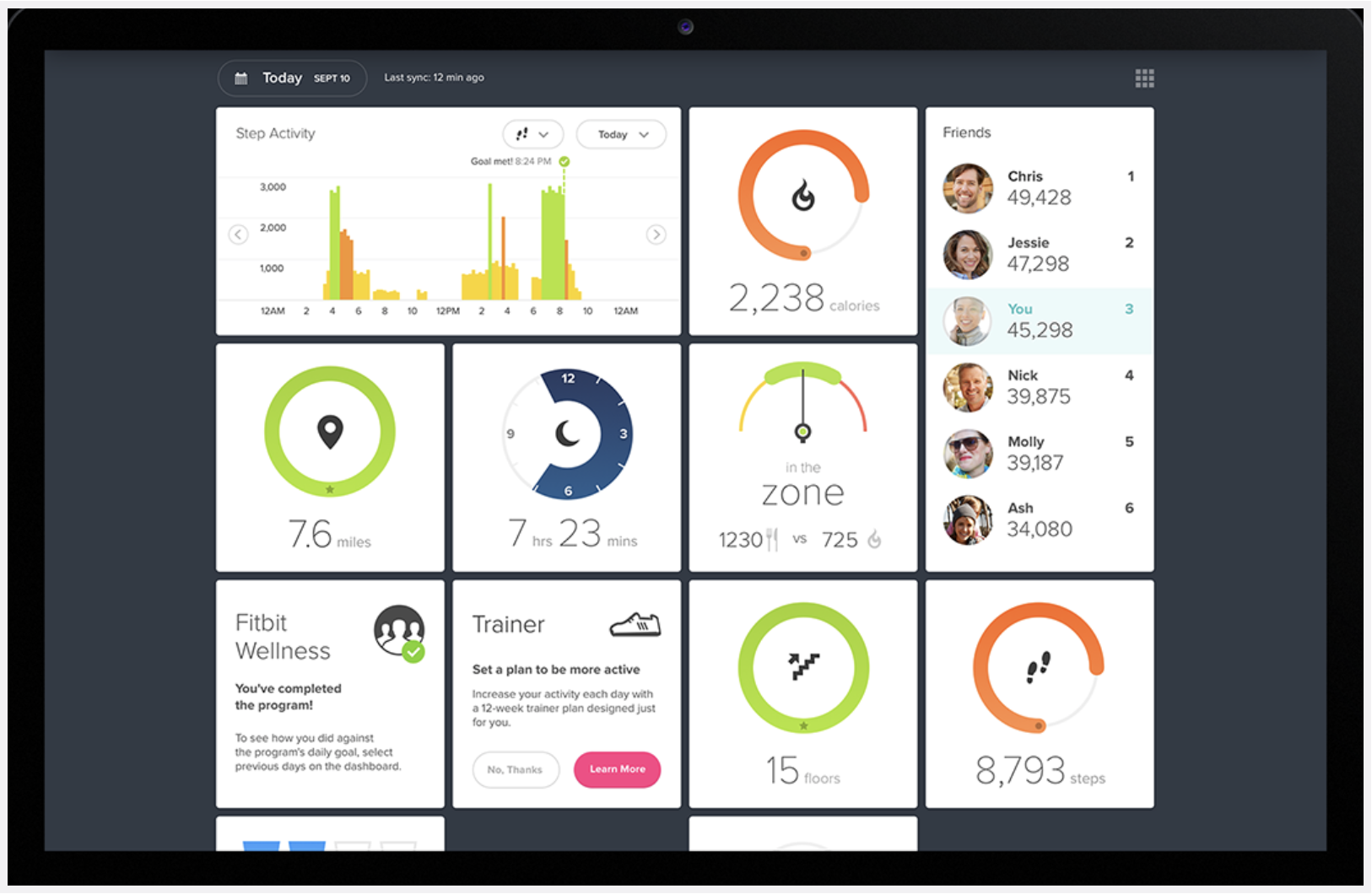
it composed of a lot of text content, dull charts, very basic, lack of pleasing elements.
Insufficient planning features:
This application focuses more on tracking activity, simple settings of some items, such as increasing the number of runs per week to consume calories, etc. it did not play a better role in assisting users in setting up more customized health improvement plans
Costly:
Although the Fitbit app is available for free for smart device, in order to get the most out of the service, user need to purchase devices like a smartwatch or tracker, these devices range in price from $70 to $330.
Unstable service:
Many users who have purchased Fitbit wearable equipment complain that there is a problem with the connection between the app and the equipment. In this case, Fitbit’s biggest advantage: the powerful tracking function has become a disadvantage. One user even says “Looks like i have a $400 piece of junk watch, pay for premium when i can‘t even use it”
Threats
Apple apps: Fitbit’s ultimate competitor is Apple. Apple offers super rich app options for their Apple watch user, meet the different needs of different people, not to mention, Apple’s brand charm is irresistible for many people.
Fitbit’s functions are focused on numbers, and numbers. it lacks fun and personalized features. Of course, some people are obsessed with data, but Fitbit does not give users greater freedom to define their own journey of health life.
UX Analysis
Usability
✔ Pros
The main task is clear:
After logging in, users can clearly know that they will focus on daily activity, water intake, and diet content.
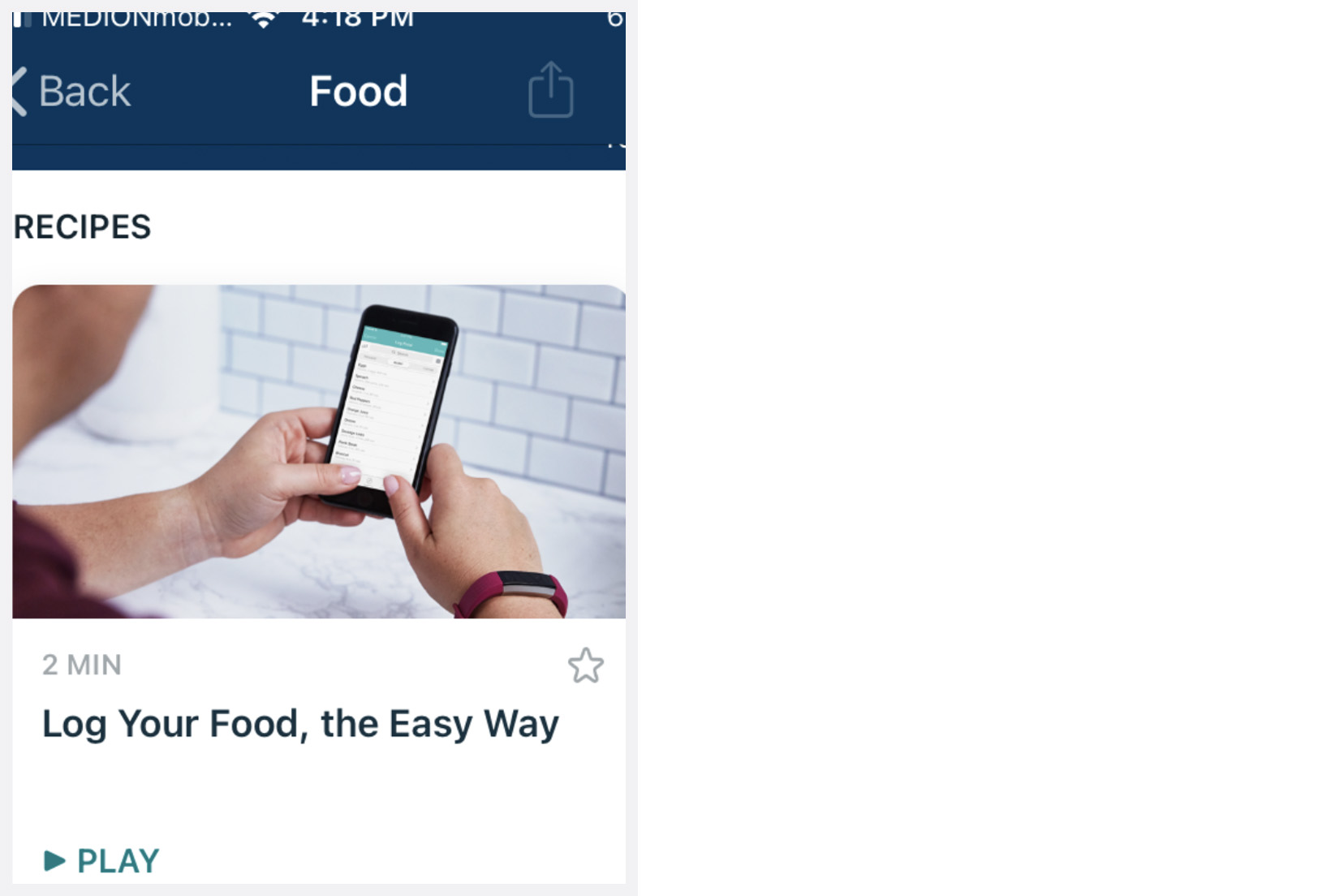
Efficient way to input packaged food information:
Our marketing strategy goal is to increase exposure within 3 user can scan the barcode on the food package, it will automatically enter the detailed nutritional content of the food.
Instructions for user:
user can see instruction for different functions in different pages (some with video) user can click to view the instruction or skip it.
✘ Cons
Unobvious button design:
Some of the chart is also a button, which is not easy for first-time users to notice that it is interactive.
Complicated steps:
1.
The area related to the user account contains many items. If the user wants to edit the account information, it needs to go through 4 pages to reach the destination.
2:
The food data must be input one by one according to the
classification and the serving size (chicken one portion/gram, two eggs…) It is very detailed but not suitable for all types of
users, it is inconvenient to use for external eating situations. Also,
there is no function such as customize commonly used recipes, which can greatly simplify input procedures.

Layout
✔ Pros
It is generally clean and clear, but the information of some different blocks are too close to each other, cause reading problems.
✘ Cons
The accumulated information is presented in a text list, which not only looks boring, but also cannot provide a wider range of viewing functions.
Navigation Structure
✔ Pros
The overall design is easy to understand, most of the pages are not difficult to find, and are arranged logically.
✘ Cons
The way it classified user information is unclear, leaving users confused about the structure: “User Profile” in the user account menu, which includes community and personal posts, however, the community area which user can visit by the menu of the main screen, also shows posts from user. these two places are unnecessary repeated. All social functions should be in the community area, so that the user account focus on personal health records, guide plan, account settings and other relatively private information.
Compatibility
✔ Pros
The Fitbit app is compatible with most popular phones like:
• Apple iOS 12.2 or higher, Android OS 7.0 or higher
• Supports PC, Xbox.
✘ Cons
Huawei or Xiaomi, it often exhibit compatibility issues that cause products/services to not operate properly.
Differentiation
✔ Pros
Make users feel valued:
Fitbit did not pay too much effort to help users to read their extensive privacy policy content. This makes users do not feel valued by the service provider. these detailed privacy policies are only used for the provider to avoid trouble. I think this reduces the user’s favorability and trust at the beginning of use, especially in this kind of products.
in addition to providing users with ideal functions, equally important, how to make users feel that they’re respected and cared.
More emotional features:
Fitbit focuses on strictly recording data and sprinting for goals. It is like writing the company’s financial statements for your body. It makes the process of care one’s self has no fun.
Calls To Action
✔ Pros
Fast registration: user can register by email account, authenticate the app account via email.
What you click is what you get: most of the interactions in the app are predictable and not random.
✘ Cons
Loading screen that caused misunderstanding:
the loading screen doesn’t shows user “please wait” but more like “done!”. for example, the “Delete Data” option in Account Settings makes users suspicious, it mislead people into thinking that all data will be deleted directly. But in fact, it enter a menu that user can choose to delete the data of different tracking items.
Easy to find, free to use: user can choose to use with the wearing device or just the app, this gives users greater freedom of use, and they will not find that they cannot use it without a device after download the app.
 WJTang.Design